

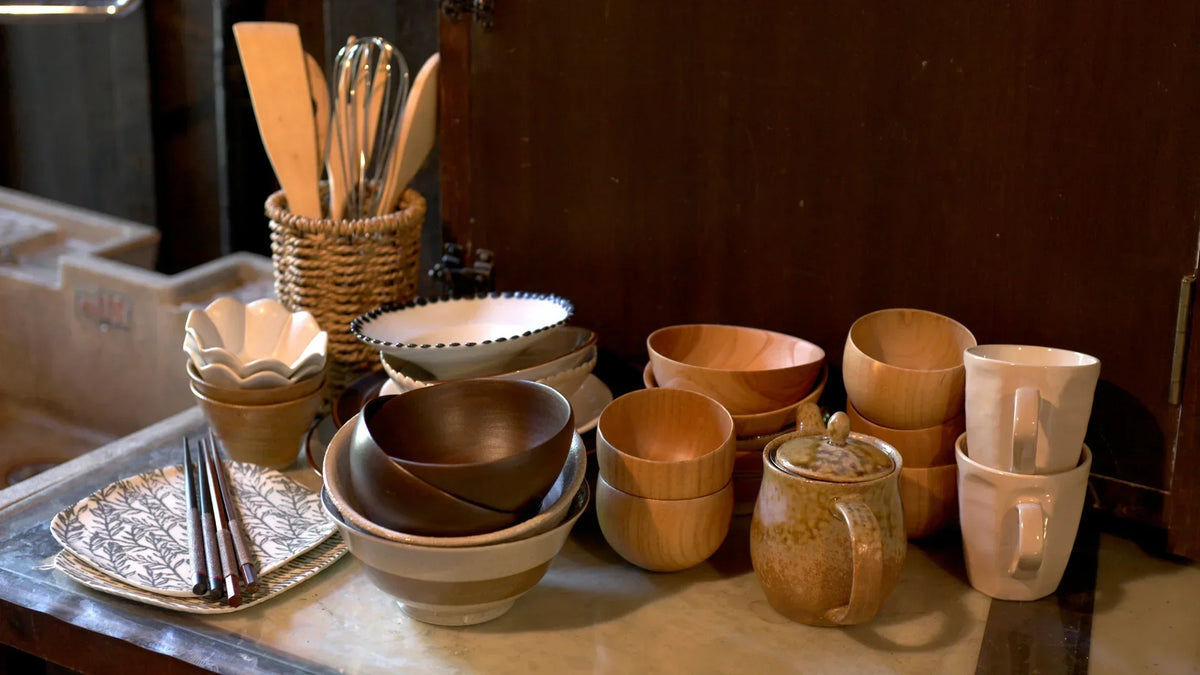
There’s something satisfying about using a well-made kitchen tool.
A good Japanese kitchen knife feels natural in your hand. A wooden spoon develops a little more character with every meal. A handmade ceramic bowl might have small variations in its glaze that make it feel like it was made just for your kitchen.
That’s part of the appeal of Japanese kitchenware. These aren't usually pieces you buy simply because you need something to cook with. They're everyday objects made with attention to materials, craftsmanship, and detail.
And while most Japanese kitchen tools don't need complicated maintenance, a little extra care can go a long way. Here are some simple ways to keep your favorite pieces looking beautiful and working well for years to come.
Start by Getting to Know the Material
Before worrying about how to care for a particular kitchen tool, take a look at what it's made from.
Japanese kitchenware can be made from everything from carbon steel and stainless steel to natural wood, bamboo, ceramic, cast iron, and stone. Each material has its own quirks.
A carbon steel knife, for example, needs a little more attention to moisture than a stainless steel one. Wooden utensils don't particularly enjoy sitting in a sink full of water, while handmade ceramic cookware generally appreciates being protected from sudden changes in temperature.
It sounds like a lot, but it's really quite simple: know your materials, and treat them accordingly.
If your piece came with care instructions from the maker, it's always worth following those first.

Give Your Japanese Knives a Little Extra Attention
For many people, a Japanese kitchen knife quickly becomes one of their favorite tools in the kitchen.
Whether you use a gyuto, santoku, nakiri, petty knife, or another Japanese blade, keeping it clean and dry is the easiest way to keep it in good shape.
After cooking, wash your knife by hand with warm water, a little mild dish soap, and a soft sponge. Then dry it with a clean towel.
That's it.
The important part is not leaving the knife sitting wet in the sink.
This is especially true for carbon steel Japanese knives. Carbon steel can develop a beautiful patina over time, but leaving moisture on the blade can also lead to rust. A quick wipe-down after each use goes a long way toward preventing that.
And as tempting as it might be to toss your knife into the dishwasher after dinner, it's best to avoid it. High temperatures, strong detergents, and contact with other utensils aren't particularly kind to a finely made Japanese blade.

Keep Your Knife Sharp
A good knife should make cooking feel easier, not harder.
Keeping your blade sharp isn't just about getting cleaner cuts. It also means you don't have to force the knife through food, which makes preparation more comfortable and controlled.
For many Japanese knives, a whetstone is the traditional choice for sharpening. It takes a little practice, but once you get the hang of it, sharpening your own knife can become a surprisingly enjoyable part of caring for it.
If you're new to Japanese knife sharpening, there's no need to rush. You can start by learning the basics or have your knife professionally sharpened.
One thing to avoid is using a cheap pull-through sharpener without checking whether it's suitable for your knife. Japanese blades can have relatively thin, carefully shaped edges, and overly aggressive sharpening can remove more material than necessary.

Don't Forget About Your Wooden Kitchen Tools
Wooden spoons, spatulas, chopsticks, cutting boards, and serving pieces bring a completely different feeling to a kitchen.
They have warmth. They feel good in your hands. And unlike plastic, they often become more interesting as they age.
The main thing to remember with Japanese wooden kitchen tools is that they don't like being soaked.
Wash them by hand with warm water and mild soap, then wipe them dry. Try not to leave them sitting in the sink, especially overnight.
It's also a good idea to let wooden pieces dry completely before putting them away. If the manufacturer recommends it, an occasional application of food-safe mineral oil can help keep wooden cutting boards and utensils from becoming excessively dry.
And unless they're specifically designed to be dishwasher safe, keep wooden kitchenware out of the dishwasher.
A little hand washing really is worth it.

Take Care of Handmade Japanese Ceramics
If you've ever picked up a piece of handmade Japanese pottery, you've probably noticed that it doesn't always look perfectly uniform.
That's part of the charm.
Traditional Japanese ceramics such as Mino ware, Bizen ware, Shigaraki ware, Tokoname ware, and Banko ware often have subtle differences in texture, color, glaze, and shape. Those small variations are part of what makes handmade pottery feel so personal.
For everyday cleaning, a soft sponge and mild dish soap are usually all you need.
With ceramic cookware and pottery, try to avoid dramatic temperature changes. For example, don't move a very hot piece directly onto a cold surface or expose it to cold water immediately after cooking. Sudden temperature changes can cause thermal shock and, in some cases, damage the piece.
Some unglazed Japanese pottery can also absorb a little moisture or oil. That's not necessarily something to worry about. It's simply one of the characteristics of natural pottery.
When in doubt, follow the care instructions provided by the maker.

Give Your Kitchen Tools a Good Home
How you store your tools matters, too.
Japanese knives shouldn't be thrown loose into a drawer where the blade can knock against other utensils. A knife block, magnetic holder, or blade guard can help protect the edge.
Wooden utensils are happiest somewhere dry with a little airflow, while handmade ceramic pieces should have enough space that they aren't constantly knocking against each other.
Think of it as giving your favorite things a proper place to live.
It also makes cooking a little nicer when the tools you reach for every day are easy to find and well cared for.

You Probably Don't Need Strong Cleaning Products
When it comes to Japanese kitchenware, more cleaning power isn't necessarily better.
For most everyday messes, warm water, mild dish soap, and a soft sponge are plenty.
Steel wool, abrasive cleaners, and harsh chemicals can scratch surfaces or affect natural materials like wood and unglazed pottery. Unless a manufacturer specifically recommends something stronger, there's usually no reason to use it.
The goal isn't to make your kitchen tools look brand new after every use.
It's to keep them clean, functional, and in good condition while allowing their natural character to develop.

Let Your Tools Age Naturally
Perhaps the nicest thing about well-made Japanese kitchen tools is that they don't necessarily need to stay perfect.
A carbon steel knife can develop a unique patina. A wooden spoon can become smoother from years of use. A handmade ceramic bowl may develop subtle changes that remind you of all the meals you've enjoyed from it.
These aren't flaws.
They're part of the story of the object.
There's a long-standing appreciation in Japanese craftsmanship for materials that show their age and use. Instead of constantly trying to make everything look untouched, there's something beautiful about allowing everyday objects to develop character.
That's one reason handmade Japanese home goods can feel so different from mass-produced kitchenware. They're meant to be used.

A Few Simple Habits Go a Long Way
You don't need an elaborate maintenance routine to take good care of your Japanese kitchen tools.
Just remember a few basics:
-
Wash Japanese knives by hand.
-
Dry carbon steel blades immediately after use.
-
Keep your knives sharp with an appropriate whetstone or professional sharpening service.
-
Don't leave wooden utensils soaking in water.
-
Let wooden kitchenware dry completely before storing it.
-
Avoid sudden temperature changes with ceramic cookware.
-
Give knives and handmade ceramics enough space when storing them.
-
Stick with mild cleaning products for everyday care.
-
Follow the maker's care instructions when a piece requires something specific.
That's really all there is to it.
The beauty of Japanese kitchenware is that these pieces are made to become part of everyday life. You don't have to treat them like museum pieces. Cook with them, serve with them, wash them, use them again the next day—and let them gradually become your own.
Because sometimes the best kitchen tools aren't the ones that look exactly the same ten years from now.
They're the ones that still feel right in your hands.
Share:
The Lifespan of Traditional Japanese Products