

There’s something instantly calming about Japanese interiors. The rooms feel warm, balanced, and peaceful without trying too hard. While most people notice the minimalist furniture or natural wood finishes first, the real magic often comes from the lighting.
In Japanese homes, lighting isn’t just practical — it’s part of the atmosphere. The placement, softness, and layering of light can completely change how a space feels. Instead of flooding a room with bright overhead fixtures, Japanese interiors use lighting in a much quieter, more intentional way.
If you love boutique Japanese home décor, Japandi interiors, or minimalist styling, learning a few Japanese lighting placement techniques can help your home feel softer, cozier, and far more elevated.
Why Japanese Interior Lighting Feels So Different
A lot of modern homes rely on one big ceiling light in the center of the room. It’s functional, but it can also make a space feel flat or overly bright.
Japanese interiors take a different approach. The lighting is usually softer, warmer, and layered throughout the room. Instead of lighting everything evenly, certain areas are gently highlighted while others stay slightly shadowed. That balance creates the relaxed, peaceful feeling Japanese interiors are known for.
It’s one of the reasons people keep searching for:
- Japanese interior lighting ideas
- Japandi lighting inspiration
- Warm minimalist lighting
- Zen home décor
- Japanese lamps for living rooms
- Ambient lighting design
The good news is you don’t need to renovate your entire home to get the look.

Stop Relying on One Overhead Light
One of the easiest ways to make a room feel more Japanese-inspired is to stop depending on a single bright ceiling fixture.
Instead, think about spreading softer light around the room.
Try adding:
- A warm floor lamp near a reading chair
- A paper lantern pendant above a dining table
- Small table lamps on shelves or sideboards
- Soft LED lighting under shelves or cabinets
This creates a much more relaxed atmosphere and instantly makes a space feel layered and intentional.
In boutique Japanese interiors, lighting often feels almost hidden. You notice the mood before you notice the fixture itself.

Warm Lighting Makes Everything Feel Better
If there’s one simple change that makes the biggest difference, it’s switching to warm light bulbs.
Cool white lighting can make beautiful natural materials feel cold and sterile. Warm lighting brings out the texture in wood, linen, ceramics, and woven décor — all the things that make Japanese interiors feel so inviting.
For the best effect:
- Stick with warm white bulbs around 2200K–3000K
- Avoid harsh blue-toned LEDs
- Use dimmable lights whenever possible
Warm lighting pairs especially well with:
- Oak furniture
- Neutral textiles
- Handmade ceramics
- Tatami-inspired textures
- Wabi-sabi décor
The entire room immediately feels softer and more comfortable.

Lighting at Different Heights Creates That Cozy Feel
One thing Japanese interiors do really well is creating visual balance. A big part of that comes from placing light at different levels throughout the room.
Instead of all the light coming from the ceiling, you’ll often see:
- Low table lamps
- Floor lanterns
- Hanging pendants
- Wall sconces
- Shelf lighting
This layered lighting setup makes a room feel calmer and more intimate.
It’s especially effective in living rooms and bedrooms where you want a softer, slower atmosphere instead of bright, all-over lighting.
Even adding one small lamp at a lower height can completely change the mood of a room.

Japanese Interiors Embrace Shadows
This is one of the biggest differences between Japanese-inspired homes and many modern Western interiors.
Japanese design doesn’t try to eliminate every shadow. In fact, shadows are part of the beauty.
Leaving parts of a room softly dimmed creates depth and makes the brighter areas feel warmer and more intentional.
That’s why Japanese interiors often feel peaceful instead of overly polished.
A few ways to recreate this feeling:
- Don’t over-light every corner
- Use accent lighting sparingly
- Let natural shadows exist
- Focus on atmosphere instead of brightness
The result feels more relaxed, sophisticated, and lived-in.

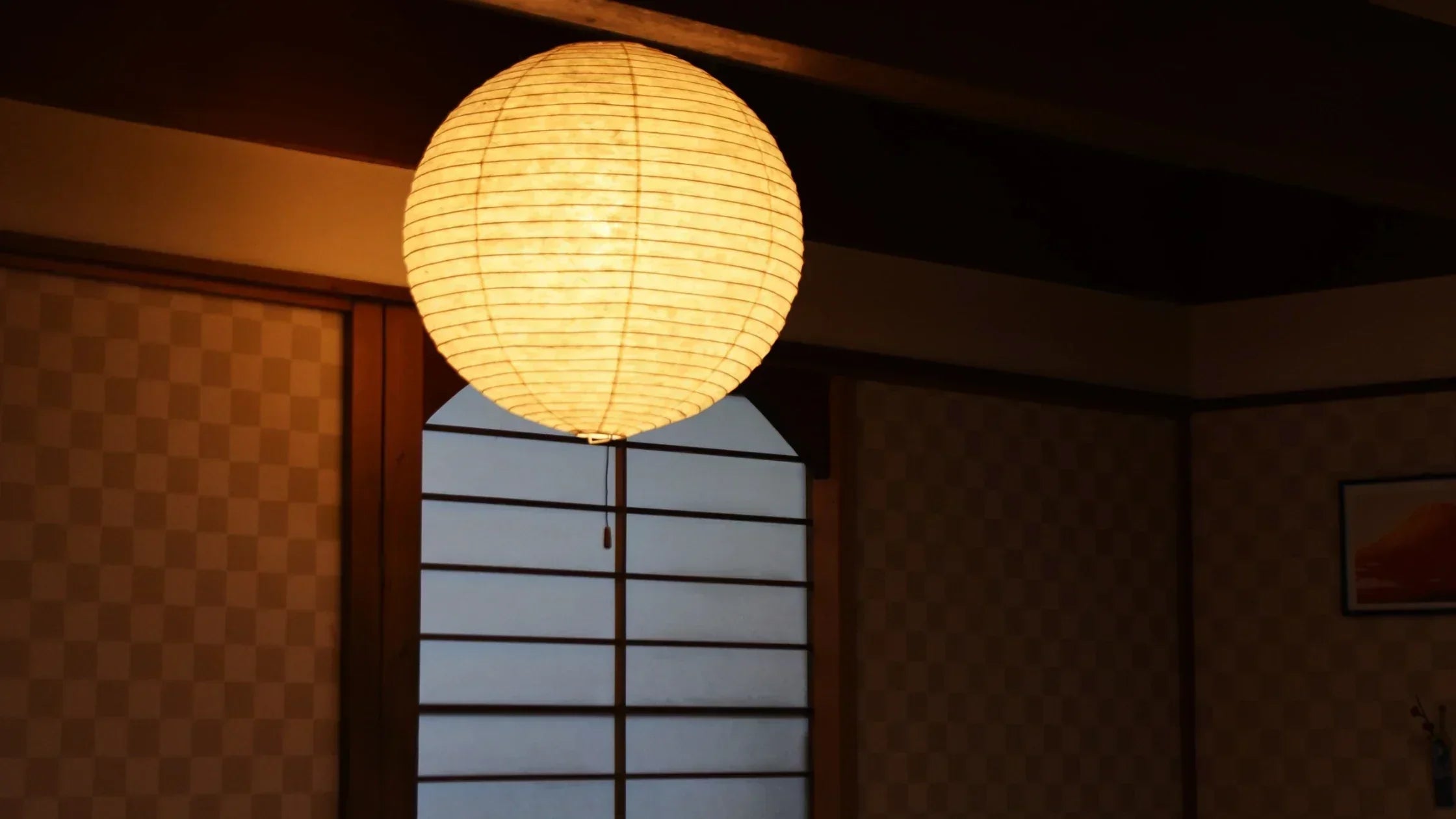
Paper Lamps and Natural Materials Make a Huge Difference
Traditional Japanese lighting uses materials that naturally soften light.
Think:
- Rice paper lamps
- Bamboo pendants
- Linen shades
- Wooden lanterns
- Woven textures
These materials diffuse light gently instead of creating glare.
A simple shoji-style lamp can completely transform the feel of a room, especially in the evening. The glow feels warm, natural, and calming in a way that standard lighting often doesn’t.
This is why Japanese paper lamps and Japandi lighting fixtures have become so popular in boutique home décor collections.
They add softness without feeling trendy or over-designed.

Place Lighting Near Natural Textures
Japanese interiors are deeply connected to nature, and lighting placement helps emphasize that connection.
Soft lighting looks especially beautiful near:
- Indoor plants
- Wooden furniture
- Stone accents
- Handmade pottery
- Natural fiber textiles
Even a small lamp placed near a textured wood console or ceramic vase can create a warm, layered look.
This works because Japanese interiors focus heavily on texture and material. The lighting is there to enhance those natural details rather than overpower them.

Keep the Fixtures Simple
If you’re shopping for Japanese-inspired lighting, simpler is usually better.
Instead of oversized statement chandeliers or ultra-modern fixtures, Japanese interiors lean toward:
- Clean lines
- Organic shapes
- Soft finishes
- Neutral colors
- Minimal silhouettes
The goal is for the room to feel calm and balanced — not visually crowded.
This is also why boutique Japanese home goods tend to feel timeless. The pieces are understated enough to work for years without feeling dated.

Dimmers Are Worth It
One small upgrade that makes a surprisingly big impact is installing dimmer switches.
Japanese interiors are all about adjusting the atmosphere throughout the day. Bright light during the afternoon can gradually shift into softer ambient lighting in the evening.
Dimmers help create that transition naturally.
They also make:
- Bedrooms feel more relaxing
- Dining areas feel warmer
- Living rooms feel cozier
- Small spaces feel softer and more inviting
Even beautiful lighting can feel harsh if it’s always at full brightness.

Final Thoughts
The secret to Japanese interior lighting isn’t buying the most expensive fixtures or filling your home with trendy décor.
It’s about creating a feeling.
Soft layered lighting, warm tones, natural materials, and thoughtful placement all work together to make a space feel calm, comfortable, and beautifully balanced.
Whether you’re decorating a full Japandi home or simply adding a few boutique Japanese décor pieces, changing your lighting setup can completely shift the mood of your space.
And honestly, sometimes adding one warm paper lamp in the right corner does more for a room than buying all new furniture ever could.
Share:
How to Mix Modern and Traditional Japanese Design
Small Details That Make a Home Feel Authentically Japanese