

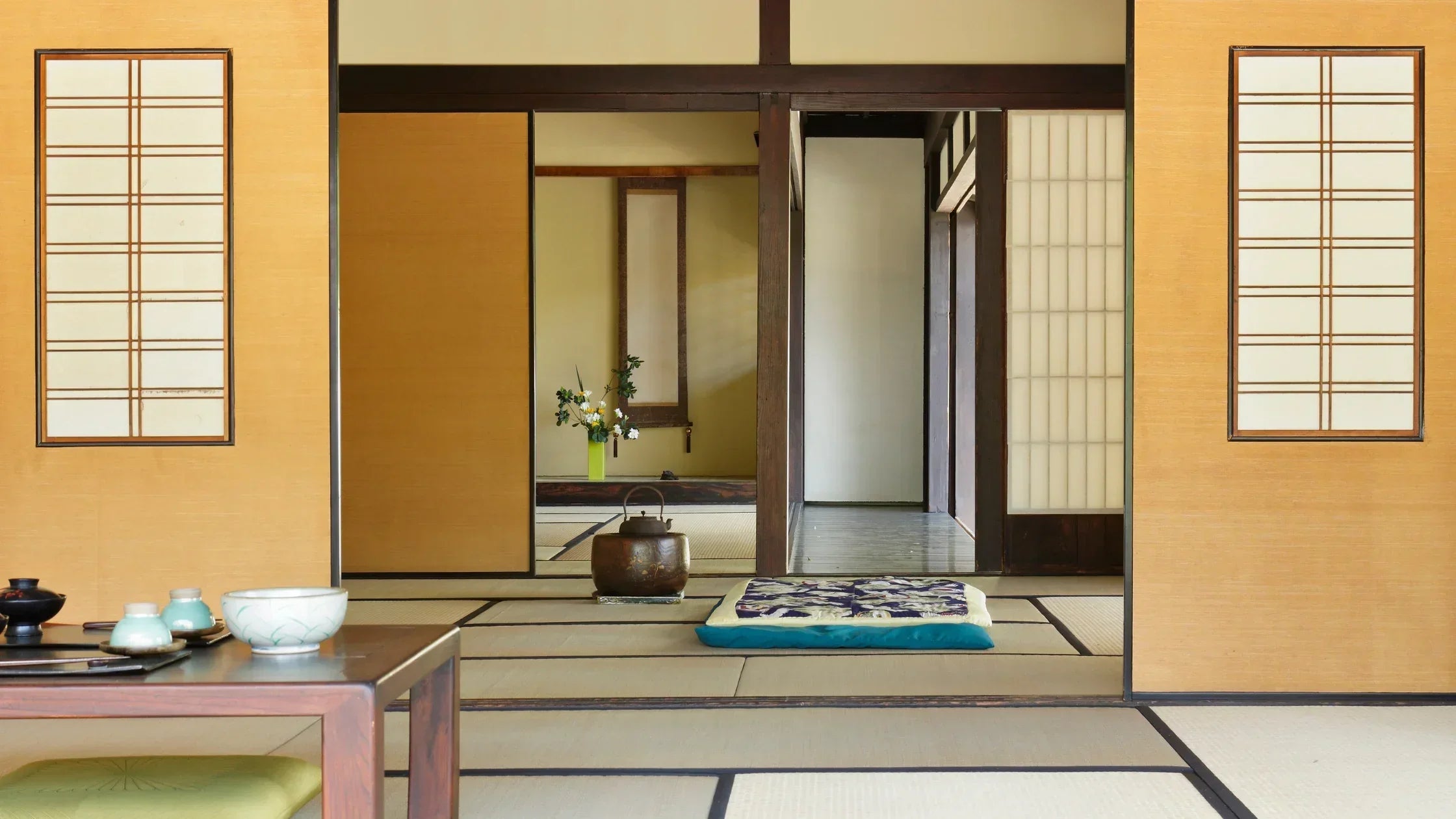
When people think of Japanese interiors, they often picture minimalist rooms, light wood furniture, and perfectly tidy spaces. While those elements certainly play a role, they're not what make a home feel authentically Japanese.
The real magic is found in the details.
It's the ceramic teacup you reach for every morning. The way afternoon light filters through a linen curtain. The small branch clipped from the garden and placed in a simple vase. These thoughtful touches create a feeling that goes beyond decor—a sense of calm, comfort, and connection to everyday life.
That's why some of the most beautiful Japanese-inspired homes don't look like showrooms at all. They feel lived in. Collected over time. Filled with objects chosen with care rather than impulse.
If you're drawn to Japanese aesthetics, here are some of the small details that can help bring that feeling into your own home.
Start with Objects You'll Actually Use
One of the most distinctive aspects of Japanese home design is that beauty is often found in everyday objects.
A handcrafted bowl isn't displayed behind glass. It's used for breakfast. A beautifully glazed mug isn't saved for special occasions. It's part of a daily routine.
Rather than decorating with items that exist solely to be looked at, Japanese homes often prioritize objects that are both useful and beautiful.
A wooden tray for serving tea. A handmade ceramic plate. A woven basket by the entryway. These pieces earn their place in the home because they contribute to daily life while adding warmth and character to a space.
The result feels natural rather than styled.

Let Natural Materials Tell the Story
Walk into almost any traditional Japanese home and you'll notice how much texture comes from nature itself.
Wood, clay, stone, cotton, linen, and bamboo bring an organic quality that synthetic materials often struggle to replicate. They feel warm to the touch. They age gracefully. And perhaps most importantly, they never seem to go out of style.
A solid wood serving board develops marks from years of use. A ceramic bowl reveals subtle variations in its glaze. Linen softens over time.
These changes aren't viewed as flaws. They're part of the object's story.
This appreciation for natural aging is closely connected to wabi-sabi, the Japanese philosophy that finds beauty in imperfection and the passage of time.

Leave a Little Space Empty
In many homes, empty space can feel unfinished. The instinct is often to fill every shelf, wall, or corner with something.
Japanese interiors take a different approach.
Open space is treated as an essential part of the design. It creates balance and allows the objects that remain to be appreciated more fully.
A single vase on a shelf can feel more striking than a dozen decorative pieces arranged together. A clear tabletop can bring a sense of calm that clutter simply can't.
This doesn't mean your home should feel sparse. It simply means giving your favorite pieces room to breathe.

Bring the Seasons Indoors
One of the loveliest traditions in Japanese living is the awareness of seasonal change.
Rather than keeping the same decor year-round, many homes make small adjustments throughout the seasons. Fresh flowers in spring. Branches and greenery in summer. Warm textiles in autumn. Simple arrangements inspired by winter landscapes.
These changes don't need to be dramatic.
Even something as simple as placing a few seasonal stems in a ceramic vase can create a stronger connection to the natural world outside your window.
It encourages you to notice the passing of time and appreciate the beauty of each season as it arrives.

Create Gentle Moments Throughout the Day
An authentically Japanese home isn't defined solely by how it looks. It's also shaped by how it's used.
Think about the moments in your day that help you slow down.
Preparing tea in the afternoon. Lighting a candle in the evening. Sitting quietly with a book before bed.
Japanese lifestyle places great value on these small rituals. They transform routine activities into moments of mindfulness and enjoyment.
The objects surrounding those rituals matter too. A favorite teapot, a handcrafted mug, or a beautifully woven placemat can make an ordinary moment feel a little more special.
Not because they're expensive, but because they're chosen with intention.

Choose Lighting That Feels Warm and Inviting
Lighting is one of the easiest ways to change the atmosphere of a room.
Many Japanese interiors rely on soft, diffused light rather than bright overhead fixtures. The goal isn't to illuminate every corner perfectly. It's to create a sense of warmth and comfort.
Table lamps, paper lanterns, and softly shaded lighting help create an environment that feels calm and welcoming.
In the evening especially, gentle lighting can completely transform a space, making it feel more relaxed and intimate.

Celebrate Craftsmanship
Mass-produced items often prioritize consistency. Handmade pieces tell a different story.
A slightly uneven rim on a bowl. Brush marks in a glaze. The texture of handwoven fabric.
These details remind us that an object was made by a person, not a machine.
Japanese craftsmanship has long valued this human connection. Whether it's ceramics, textiles, woodwork, or metalwork, artisan-made pieces bring depth and authenticity to a home.
They're often the items people treasure most—not because they're perfect, but because they're unique.

A Home That Feels Lived In
Perhaps the biggest misconception about Japanese interiors is that they're meant to look flawless.
In reality, the most inviting homes feel personal and lived in.
Books stacked on a table. A well-used teapot in the kitchen. A linen napkin draped casually over a chair. These details tell the story of daily life unfolding naturally.
Authentic Japanese aesthetics aren't about achieving perfection. They're about creating an environment that supports a slower, more thoughtful way of living.

The Beauty Is in the Details
A home doesn't begin to feel Japanese because of one large design decision. It happens through dozens of small choices made over time.
Choosing a handmade bowl instead of a disposable one. Bringing home a ceramic vase you'll use for years. Making room for natural materials, seasonal beauty, and everyday rituals.
These details may seem small on their own, but together they create something powerful: a home that feels calm, welcoming, and deeply connected to the rhythms of daily life.
And that's what makes Japanese design so enduring. It's not simply about how a space looks. It's about how it makes you feel when you're living in it.
Share:
Lighting Placement Secrets from Japanese Interiors
Transforming a Western Room with Japanese Design